The water around the island leaves room to see boats on several approaches.
What you see
A raised island sits in pale water like a model on a table. White cliffs, compact houses and squares of grass give each elevation a clean outline.
How it shapes play
Follow the longboats across the empty water, then trace the shoreline to a beach. The full-island view lets you connect an approaching boat with the route a squad needs to take to intercept it.
The visible tile sides distinguish elevated ground from the routes between it.
What you see
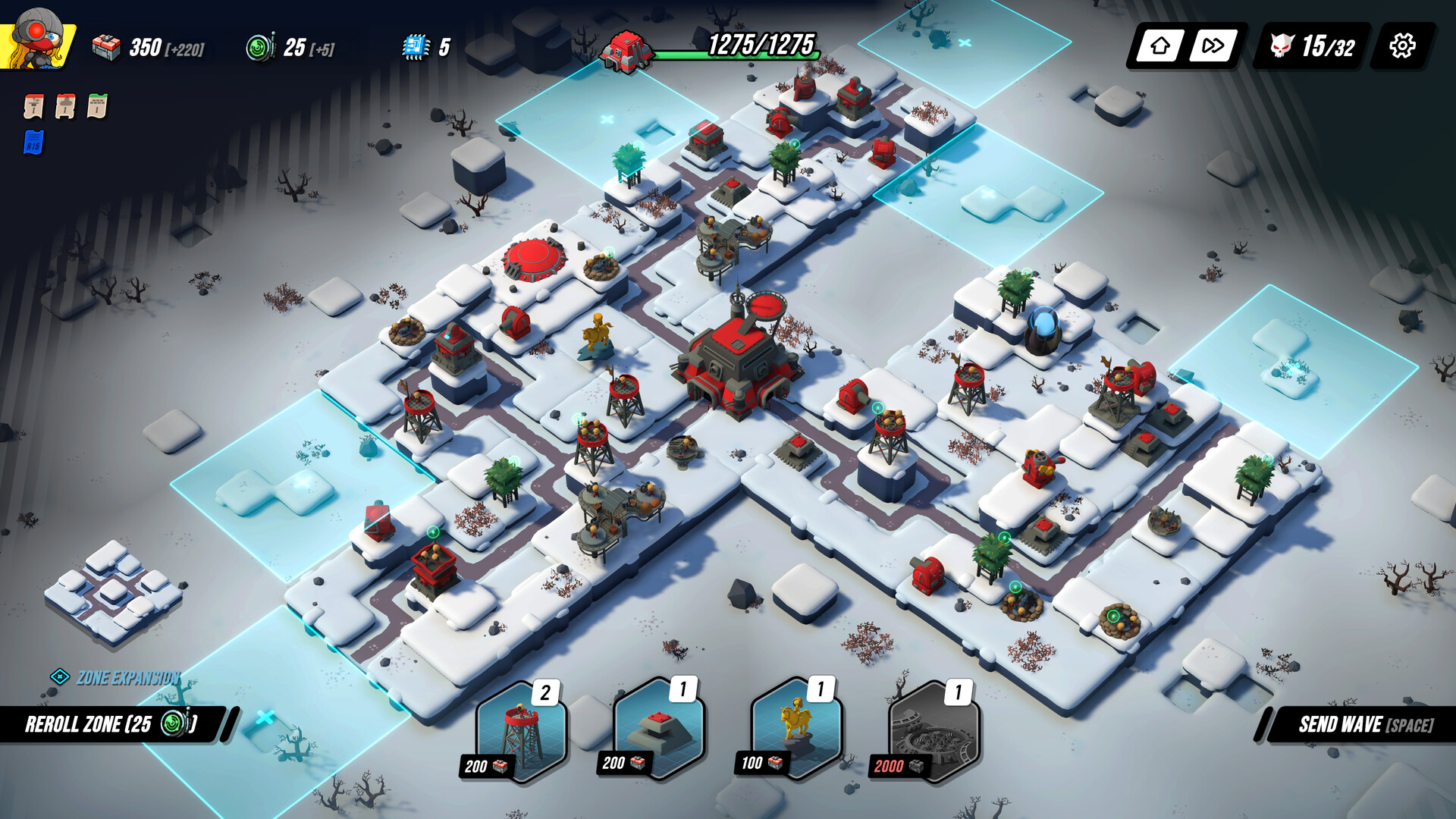
Thick terrain tiles, raised platforms and lit placement spaces make the battlefield look like a modular board. Towers pick up stronger colours against the terrain.
How it shapes play
In the snow map, look for cyan placement spaces at the board edge and the steps joining levels. They show where a new tile can extend a route and where height can turn a short path into a choke point.
At the frontier of the village, the next placements are visible as empty hexes.
What you see
Hand-painted forests, water and miniature buildings sit on hexagonal tiles. The unfilled board fades into a flat pastel field.
How it shapes play
Follow the river and forest boundaries up to the edge of the map. The pale candidate spaces give you room to picture the next tile, and the little terrain shapes show which edge connections you can continue.
Look at the edge of each board. Bad North’s water frames the directions an attack can come from. Tower Dominion’s raised edges show where creatures can travel. Dorfromantik’s empty hexes show where the landscape can grow.
 GAME