The boss and player differ sharply in scale, and the inked forms stand out against the painted water.
What you see
Traditional cel animation gives the large bosses stretchy limbs and expressive faces. Watercolour scenery behind the fight carries softer detail and less prominent edges.
How it shapes play
In the flying fight, keep track of the little red plane and watch the boss’s expression and pose change. The drawn motion is part of reading the attack rhythm.
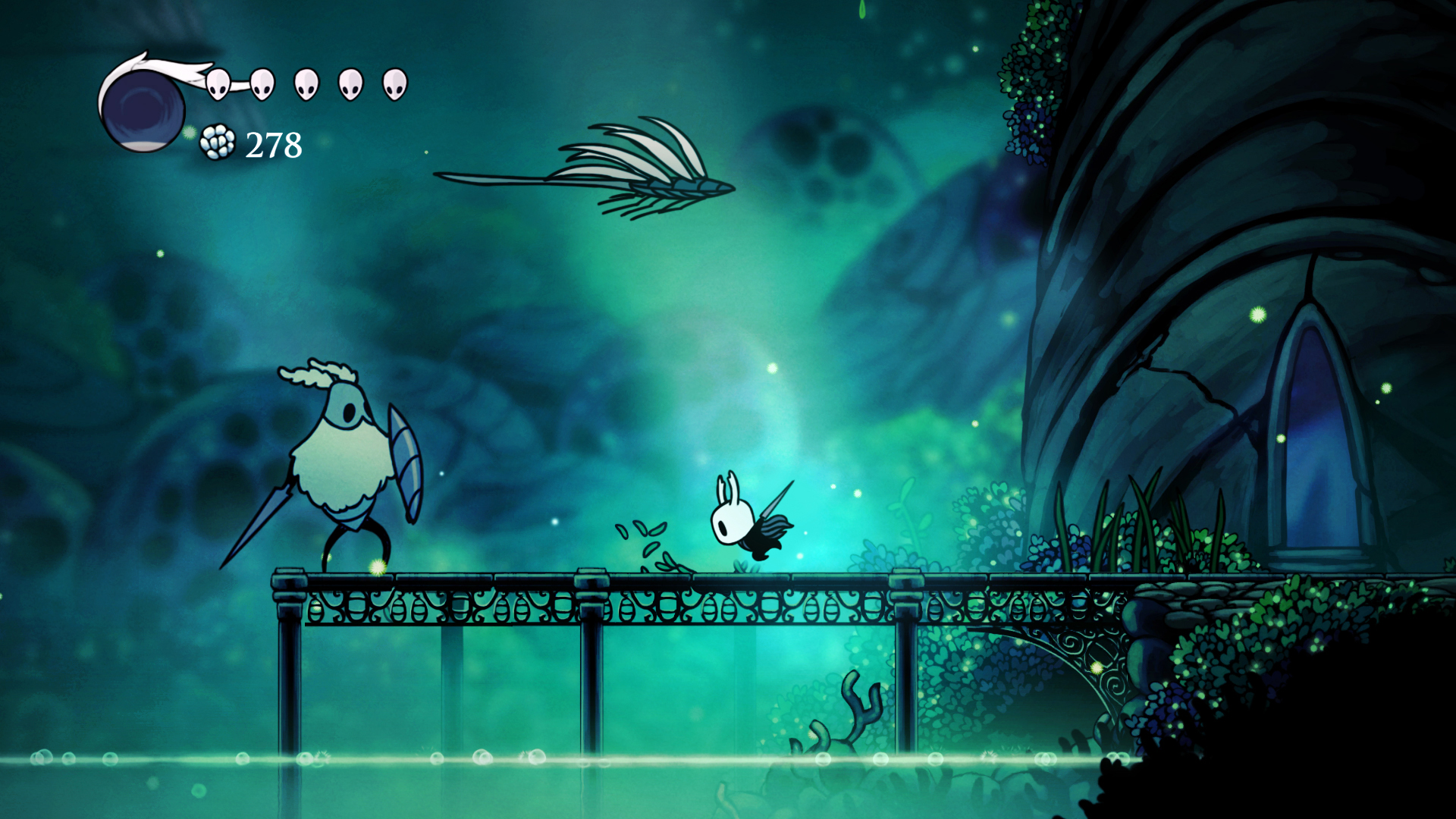
The white mask and the dark platform read clearly against the misty cavern.
What you see
Curved inked silhouettes stand in front of layers of hazy background detail. The Knight’s two pale horns make a small, recognisable outline.
How it shapes play
During a jump or an encounter, find the white mask and then the sharp edge of the walkable floor. The softer layers give the cavern depth without competing with those immediate cues.
The spare background gives the thin architectural lines room to show through.
What you see
Thin architecture and large washes of colour surround a tiny figure. Deep red structures sit against a pale, nearly empty background.
How it shapes play
Look for the little figure and the delicate lines around it to follow the route. The broad areas of colour make a shift in location or mood feel more important than the size of the jump.
The whole ship stays in view as you arrange rooms and plan a route between them.
What you see
The cutaway ship arranges hand-drawn rooms and ladders in a clear side-on silhouette. Rooms differ in size, roofline and interior objects.
How it shapes play
Find the room you want, then follow the ladders and platforms up to it. As you build, that same side view lets you see how a new room changes the route through your ship.
Cuphead makes the boss the biggest moving shape, while Hollow Knight gives the tiny player character the clearest outline. In Gris, the scale of the painted setting makes the small figure easy to place within a larger composition.
 GAME